Home Elevator or Stairlift: Which Is Right for Your Upstate New York Home?
You’ve probably spent more time researching this than you expected. Maybe a parent had a fall, or a diagnosis changed things, or you just noticed the stairs are getting harder. Now you’re trying to figure out whether a home elevator or stairlift is the right answer, and the more you search, the more questions you seem to have.
That’s completely normal. A home elevator and a stairlift solve similar problems, but they’re not interchangeable. The right choice depends on your home’s layout, your mobility needs, your budget, and what “staying in this home long-term” actually looks like for your family. Getting that wrong means spending money on a solution that doesn’t fully work.
What Each Mobility Option Actually Does
A home elevator and a lift both make multi-level living possible for people with mobility challenges, but they work differently and serve somewhat different needs.
Stairlifts
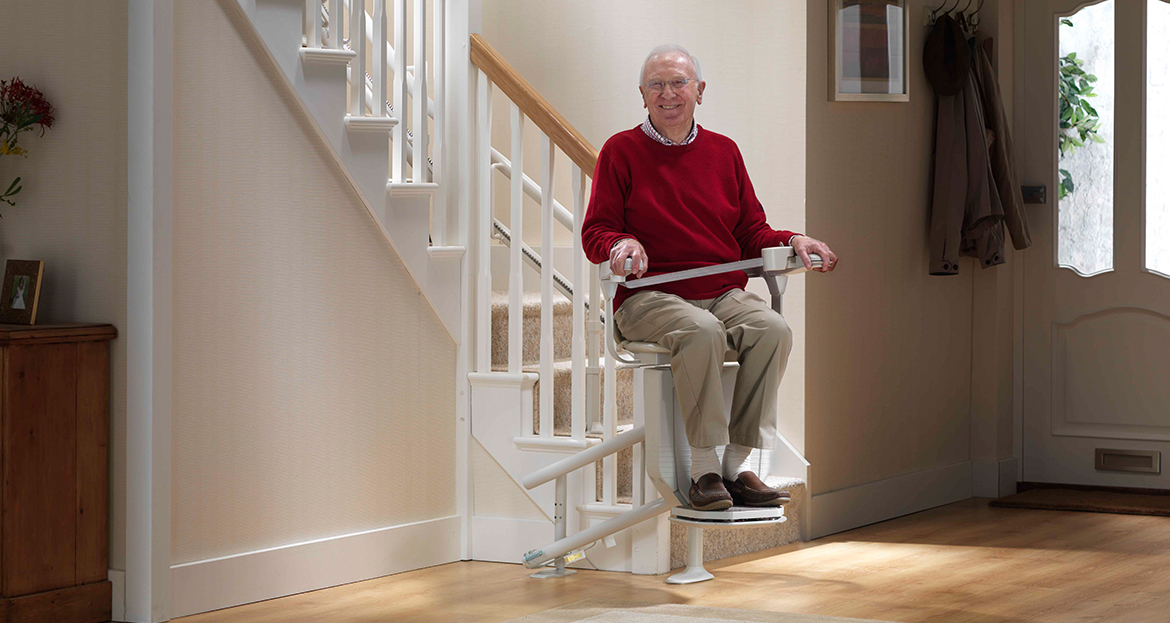
A stairlift is a motorized chair that travels along a rail mounted directly to your stair treads. You sit down, fasten the seatbelt, and ride up or down. Installation doesn’t require major construction. Most straight-staircase stairlift installations are complete in a single day, and the rail follows the existing staircase without altering the structure of your home. For someone who needs help navigating one staircase and can transfer to and from the chair independently, a stairlift is often the most practical and affordable solution.
Home Elevators
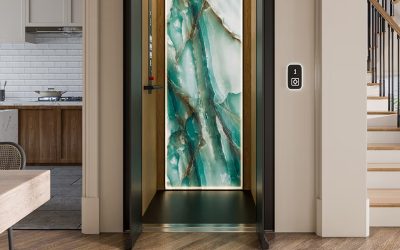
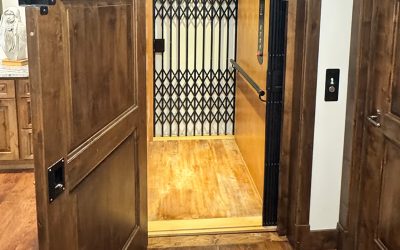
A home elevator is a fully enclosed cab that travels between floors inside your home. It can accommodate a wheelchair or mobility device, carry items between floors, and provide access across all levels of the home from a single unit. Installation requires more planning: a hoistway or shaft space, structural modifications, and permits. Occasionally a machine room is necessary depingon the drive model cohen. Most residential elevator installations take two to five days. The result is a permanent home feature that can serve multiple household members and pets, simplify luggage transport, and significantly increases a home’s resale value.
The Curved Staircase Question
One of the most common points of confusion in this comparison is how staircase shape affects cost, and it’s worth addressing directly before you get too far into a budget conversation.
Straight Staircases
If your staircase runs in a straight line, a stairlift is one of the most affordable accessibility solutions available. The rail is a standard manufactured part, installation is fast, and the overall investment is modest compared to a home elevator. For many families, a straight stairlift is the clearest path to solving the problem without a major financial commitment. And they are typically readily available for streamlined project completion.
Curved Staircases
If your staircase has any turns, landings, or curves, the cost picture changes substantially. Curved stairlift rails are custom-fabricated to fit the exact shape of your staircase, which makes them significantly more expensive than a straight installation. The gap between a curved stairlift and an entry-level home elevator narrows considerably, so if your staircase isn’t straight, it’s worth pricing both options before assuming one is clearly more affordable.
Who Each Option Is Best For
Cost and installation timelines matter, but the most important factor is fit. Here’s how to think about which solution actually suits your situation.
A Stairlift Is Likely the Right Fit If…
You or your family member needs help with one staircase, can sit and transfer to the chair without assistance, doesn’t use a wheelchair or scooter, and is primarily focused on a budget-conscious solution with minimal home disruption. Stairlifts are also a strong choice when the goal is to solve a specific, near-term challenge: recovering from surgery, managing a temporary mobility limitation, or bridging the gap while a larger accessibility plan comes together.
A Home Elevator Is Likely the Right Fit If…
The person using it relies on a wheelchair or mobility device, needs access to more than one set of stairs, wants to carry items between floors safely, or is planning for long-term aging in place in a multi-story home. Home elevators in Syracuse are also the better long-term investment for families who anticipate changing needs over time. A stairlift addresses today’s problem; an elevator addresses today’s problem and the ones that may come later.
Choosing between a home elevator and a stairlift is easier when you can see your own home in the conversation. Syracuse Elevator offers free in-home consultations where a real consultant or sales person looks at your space, listens to your situation, and gives you a straight answer on what fits.
Planning for the Long Term, Not Just Right Now
The most important question for most families isn’t which option costs less. It’s whether the right choice today will still be the right choice in five years.
Upstate New York homes, particularly the older multi-story colonials and Victorians common across the Syracuse, Rochester, and Binghamton areas, were not designed with accessibility in mind. Narrow hallways, steep stairs, and original floor plans make this a region where mobility needs often collide with architectural reality. Choosing the right solution the first time matters more here than it might in a newer home built with wider doorways and lower-rise stairs.
A stairlift solves a specific problem well. If needs evolve, it may need to be replaced with a more
comprehensive solution. A home elevator is a longer-term investment that tends to meet needs as they change rather than requiring a second round of modifications. That doesn’t mean a stairlift is the wrong choice. It means the decision is worth thinking through not just for today, but for the years ahead.
What to Expect From the Installation Process
Anxiety about disruption is one of the most common reasons families delay an accessibility decision. Here’s a realistic picture of what each installation looks like.
Stairlift Installation
For a straight stairlift, installation is typically complete in a single day. A technician arrives, mounts the rail to the staircase treads (not the wall), connects power, and walks you through operation. The staircase remains usable during and after installation, and there’s no drywall work, no permits in most cases, and no mess. Curved stairlift installations take a bit longer, usually two to three days, because the custom rail needs to be fitted and adjusted on-site.
Home Elevator Installation
A home elevator installation is a more involved project. It typically takes two to five days depending on the hoistway configuration, the type of elevator selected, and the extent of any structural work required. Most home elevator installations involve some carpentry and drywall work to create or finish the shaft space, and permits are required in New York State. It’s a real renovation, but it’s a contained one, and a good installation team will minimize disruption and give you a clear timeline before work begins.
Find the Right Answer for Your Home With Syracuse Elevator
There’s no universal answer to whether a home elevator or stairlift is right for your home. The right choice comes down to your staircase, your mobility needs, your budget, and what you’re planning for. What’s true for a 70-year-old with a straight staircase and a recent knee replacement is different from what’s true for a wheelchair user in a three-story colonial in Rochester.
Syracuse Elevator has been helping families across Upstate New York work through exactly this decision since 1999. As a local, family-owned stairlift company and home elevator company serving Syracuse, Rochester, Buffalo, Albany, and the surrounding region, the team’s approach is to educate first and recommend only what genuinely fits. If you’re ready to get a clear, personalized answer for your home, reach out to schedule a free in-home consultation.